Two Hands on the Wheel: The Indie Director's Guide to Sharing the Driver's Seat
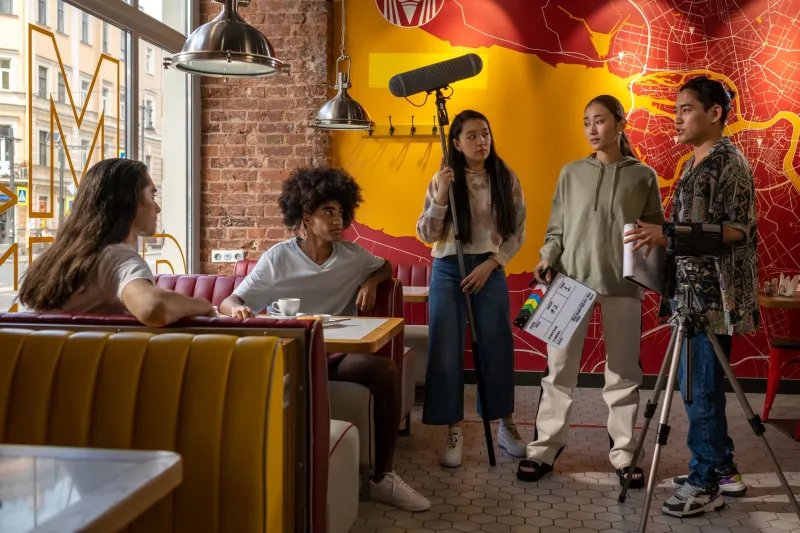
There's a particular kind of exhaustion that only indie directors know. It's not the physical grind of a 14-hour shoot day or the mental drain of rewriting a scene at midnight. It's the specific, bone-deep fatigue that comes from trying to be every single thing to every single department — the one person in the room who has the answer, always, no matter what.
For a lot of first-time and early-career filmmakers, that posture feels like protection. Like if you loosen your grip even slightly, the whole vision slips away. But here's what the best independent films keep proving, over and over: the tightest grip isn't what holds a movie together. Trust is.
The Myth of the All-Knowing Director
Hollywood has done indie filmmakers no favors with its mythology of the auteur — the lone creative genius who sees every frame before it's shot, who controls every variable, who bends the world of the film to a singular will. That image is seductive. It's also, for most working independent directors, completely unsustainable.
The budgets aren't there. The time isn't there. And honestly? The expertise isn't always there either.
"I came in thinking I had to know more than everyone in every room," says one director who's made three features on budgets under $500,000. "By day three of my first shoot, my DP was gently suggesting things I hadn't even considered, and I was so defensive I nearly shut her down. I look back at that now and cringe. She was right about almost everything."
The irony of indie filmmaking is that the directors who most loudly insist on total creative control are often the ones whose films end up feeling the most airless. When no one is allowed to push back, nothing gets challenged. When nothing gets challenged, the director's blind spots just get bigger.
Creative Tension Isn't the Enemy
There's a useful distinction that gets lost in conversations about creative control: the difference between creative tension and creative conflict. They feel similar in the moment, but they produce very different results.
Creative conflict is personal. It's about ego, about who wins the argument, about whose name goes above the title. It's corrosive on a small set where everyone's already stretched thin.
Creative tension, though? That's something else entirely. That's a cinematographer pushing back on a lighting setup because they know something the director doesn't. That's a production designer quietly suggesting an alternative that serves the story better. That's a sound mixer flagging an issue that would have wrecked the edit three months later.
"The best thing that ever happened on my second film was having a crew that wasn't afraid of me," says another indie director, whose debut screened at several regional festivals. "They'd been hired for their skills, and they used them. I had to get comfortable with the idea that my job wasn't to be the smartest person on set — it was to make sure everyone's smartness was pointed in the same direction."
That reframe — from authority to alignment — is where a lot of indie directors find their footing.
Knowing Which Hills Are Worth Dying On
None of this means a director should become a passive presence who just nods along to whatever the crew suggests. The vision has to come from somewhere, and on an indie set, it almost always comes from the person who wrote the thing, raised the money for it, and will be answering questions about it for years.
The skill isn't surrendering control. It's knowing which elements of the film are non-negotiable and being honest with yourself about which ones you're holding onto for the wrong reasons.
For most directors, the non-negotiables are the things that live in the emotional core of the story — the specific feeling a scene needs to carry, the tonal register the film is operating in, the relationship between two characters that everything else hangs on. Those things belong to the director. They should be protected.
But the specific lens choice? The exact shade of a wall in the background? The precise blocking of a scene that your AD has spotted a smarter solution for? Those are the places to breathe, to listen, to let someone else lead.
"I started keeping a mental list," says one filmmaker who recently wrapped her third feature. "Things that are mine, and things that are just preferences dressed up as vision. The list was humbling. A lot of stuff I thought was essential turned out to be habit."
Building a Crew You Can Actually Trust
Of course, all of this assumes you've built a team worth trusting in the first place. And on indie productions, where budget constraints mean you're sometimes working with people you've never met before, that's not a given.
The directors who navigate this best tend to do their homework before the shoot, not during it. They look at the work of every department head they're considering. They have real conversations — not just about logistics but about sensibility, about what excites them, about how they've handled disagreements on previous sets. They're looking for people who are confident enough to push back but collaborative enough to get behind a decision once it's made.
"Hiring is the most important creative decision a director makes," one veteran of the festival circuit puts it plainly. "Everything else flows from that. If you've got the right people, the creative tension works for you. If you've got the wrong people, it tears you apart."
There's also something to be said for transparency early on. Telling your crew, explicitly, that you want their expertise — that you're not looking for people to execute your orders but people to help you make the best version of the film — changes the dynamic on set from day one.
The Film That Gets Made vs. The Film in Your Head
Every filmmaker carries around a version of their film that exists only in their imagination. It's perfect there. Every frame lands. Every performance hits. The lighting is exactly right.
The film that actually gets made is messier, stranger, and shaped by forces the director never anticipated. Sometimes those forces diminish the work. But sometimes — more often than most directors will admit — they make it richer.
The black balloon floats because it's lighter than what surrounds it. The films that lift off, the ones that travel from festival to festival and find audiences who feel seen by them, are rarely the products of one person's uncontested vision. They're the result of a director who knew what they wanted badly enough to fight for it, and trusted their team enough to let the fight make the film better.
Letting someone else lead doesn't mean losing the wheel. It means being smart enough to know when two hands are steadier than one.