Your Script Called. It Wants a Breakup.
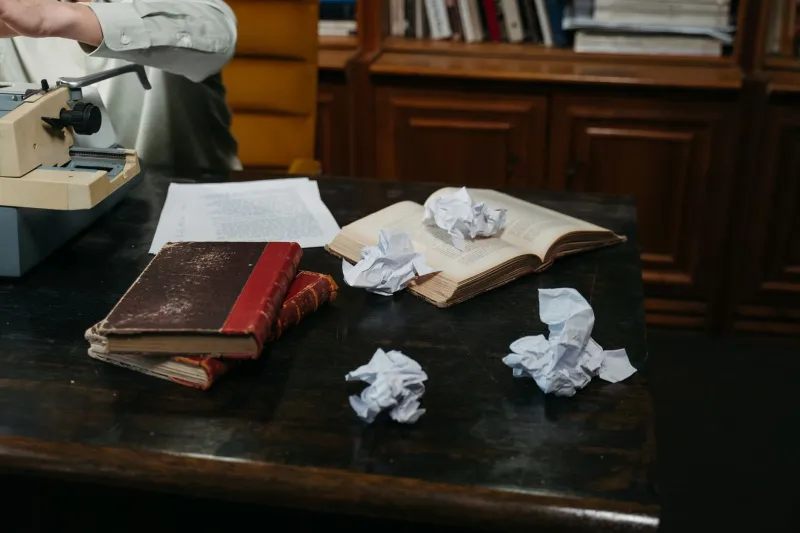
There's a particular kind of stubbornness that lives inside every indie filmmaker. It's the same stubbornness that keeps you going when the money dries up, when the location falls through, when your lead actor gets a last-minute callback for a Marvel project and ghosts you on a Tuesday. That stubbornness is a survival tool. It's also, at a certain point, a trap.
Because here's the thing nobody tells you at film school or at those weekend workshops in Brooklyn and Austin: your first draft isn't your vision. It's your attempt at your vision. And sometimes — more often than anyone in this industry likes to admit — that attempt is quietly suffocating the very story you're trying to tell.
The Script as Security Blanket
There's a psychological reason writers and writer-directors cling to their original material. That first draft represents the moment the idea felt most alive, most electric. It's the version you wrote at 2 a.m. when everything clicked, when the characters were speaking and you were just transcribing. Of course you love it. Of course it feels untouchable.
But love is not the same as quality. And attachment is not the same as clarity.
The independent film world is full of projects that stalled not because of budget constraints or distribution nightmares, but because someone couldn't let go of a scene, a character, a structural choice that made sense emotionally but not cinematically. The script becomes the competition — the thing the final film is always losing to in the filmmaker's head.
This is sometimes called "the draft problem," and it's way more common than the festival circuit's highlight reel would suggest.
When the Story Tells You Something's Wrong
So how do you know? How do you distinguish between a draft that needs polishing and one that needs a fundamental rethink?
A few signals worth paying attention to:
You can't pitch it cleanly. If you've been working on a project for a year and you still stumble when someone asks what it's about, that's not a communication problem. That's a story problem. A film that knows what it is can be described in two sentences. If yours can't, the draft might not know what it is either.
Every note you get points to the same place. Feedback from trusted readers tends to cluster. If three different people — people with different tastes and backgrounds — all circle the same act-two sequence or question the same character's motivation, your instinct to defend it might be the exact wrong move.
You're explaining the film more than you're showing it. This one shows up a lot in table reads. If you find yourself saying "no, but what that scene means is..." after someone expresses confusion, the scene isn't doing its job on the page. And if it can't do it on the page, it probably won't do it on screen.
Real Rewrites, Real Results
Look at the path of The Witch, Robert Eggers' debut feature. The script went through years of development, and Eggers was famously rigorous about his historical research — but he was equally willing to interrogate what was and wasn't working dramatically. The result was a film that felt both meticulously specific and emotionally universal. That balance doesn't happen by accident. It happens when a filmmaker trusts the story over their attachment to any particular version of it.
Or consider Beasts of the Southern Wild, where the source material (a stage play called Juicy and Delicious) was so substantially reimagined for the screen that the final film operates almost as a different species of storytelling. That kind of transformation requires courage — and a willingness to treat the original draft as a starting point rather than a destination.
Closer to the micro-budget world, countless Sundance breakouts exist precisely because their makers did a hard pass on what wasn't working. The films that arrive at festivals feeling inevitable almost always have a behind-the-scenes story of significant creative surgery.
The "Kill Your Darlings" Problem with "Kill Your Darlings"
Everyone's heard the William Faulkner quote. It gets printed on mugs and pinned to corkboards in writers' rooms. But the advice is often misapplied — people interpret it as "cut your favorite lines" when the deeper meaning is closer to "cut whatever you're protecting for the wrong reasons."
The wrong reasons usually involve identity. We protect material because it's autobiographical, because it cost us something emotionally to write, because it represents an idea we've had since we were nineteen. None of those are story reasons. And film — particularly independent film, where every dollar and every minute of screen time is precious — demands story reasons for everything.
Asking yourself why you're protecting something is more useful than asking whether you should cut it. If the answer is "because it's true" or "because I love it," that's a flag. If the answer is "because it does this specific thing that nothing else in the script does," you're on firmer ground.
Practical Steps When You Suspect Your Draft Is the Problem
Rather than staring at a document you've read so many times you can no longer see it, try a few concrete resets:
-
Outline backward from your ending. Work from what you want the audience to feel in the final scene and trace the logic back to page one. Does your current draft actually build to that? If not, where does it diverge?
-
Give it to someone who doesn't like you. Not an enemy — but not your best friend either. Someone who will read it professionally and tell you what isn't landing without worrying about your feelings afterward.
-
Write the version you're afraid to write. Most filmmakers know, somewhere underneath the defensiveness, what the braver version of their story looks like. The character who shouldn't survive. The ending that doesn't resolve cleanly. The structural choice that scares them. Write that version, even just as an exercise. See if it breathes differently.
-
Step away for a real interval. Not a weekend. Weeks. Long enough that you can read it the way a stranger would.
The Draft That Lets the Film Fly
Here at The Black Balloon Movie, we believe every story deserves to fly. But balloons don't lift off when they're weighed down — and a draft you're holding onto for the wrong reasons is dead weight, no matter how much it means to you.
The filmmakers who tend to make the work that lasts are the ones who figured out how to love their stories more than they love their drafts. That's a distinction that sounds simple and is genuinely hard to live out in practice. But it's the work. It's the real work, before cameras roll, before the edit suite, before any of the other beautiful chaos of independent filmmaking begins.
Your first draft got you here. It doesn't have to take you the rest of the way.