Cut to the Bone: How Indie Editors Are Turning Quiet Choices Into Loud Statements
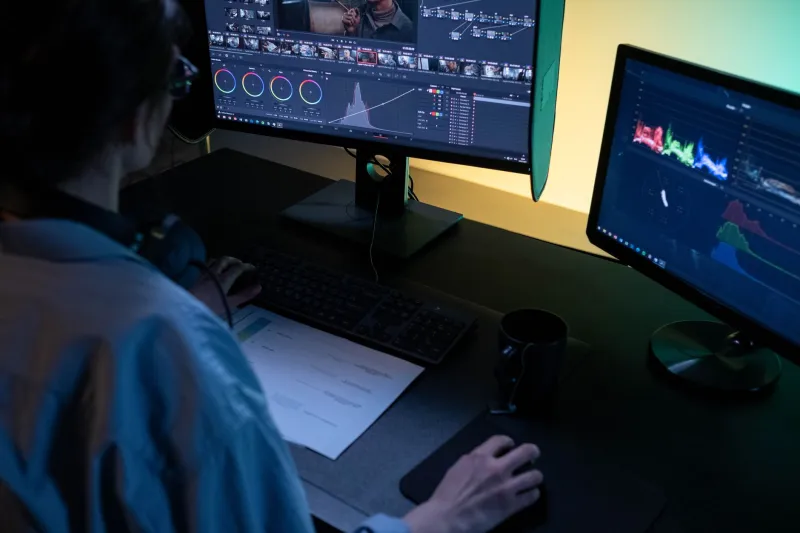
There's a saying in the editing room that goes something like this: if the audience notices the cut, you've already failed. It's a brutal standard, and for indie editors working without the safety net of massive budgets or reshoots on demand, it's a standard that demands everything they've got.
But here's the thing — some of the most exciting editing happening in American cinema right now isn't coming from the big studio houses in Burbank or the polished post-production suites in Manhattan. It's coming from scrappy independent productions where a single editor might be pulling double duty, working on a laptop in a spare bedroom, making decisions that will define whether a film lands or disappears without a trace.
And somehow, against all odds, they keep getting it right.
The Edit Is the Story
Most people think of editing as the part of filmmaking where you string together the best takes and clean up the rough edges. That's a little like saying a novelist just picks the best sentences. Editing is, at its core, an act of storytelling — arguably the most powerful one in the entire filmmaking process.
When a director hands over footage, the editor inherits a raw universe of possibility. The pacing of a scene — how long a shot lingers, when a cut arrives, what sound bleeds in from the next moment — creates the emotional contract between the film and its audience. Get that contract right and viewers are locked in. Get it wrong and even the most beautiful photography in the world can't save you.
For indie films, this stakes-everything quality of the edit is both a challenge and a genuine competitive advantage. Without the pressure to hit familiar genre beats on a studio-approved schedule, independent editors have room to breathe. Room to take risks. Room to let a shot run three seconds longer than anyone expects — and discover that those three seconds are the whole movie.
Breaking the Grammar
Hollywood editing has its own grammar. Coverage-based cutting, shot-reverse-shot dialogue scenes, action sequences built around quick intercutting — these conventions exist because they work, and because audiences have been trained over decades to process them without thinking.
Indie editors have increasingly been willing to throw that grammar out the window, or at least bend it into new shapes.
Take the jump cut, once considered a mistake, then a French New Wave novelty, now a tool that filmmakers like the editors behind Tangerine and Moonlight have used to create a sense of fractured time and emotional urgency that conventional cutting simply can't achieve. Or consider the long take — a single unbroken shot that forces the audience to sit inside a moment rather than being whisked through it. In the right hands, a four-minute uncut scene can generate more tension than a dozen rapid-fire edits.
What makes indie editing distinctive isn't necessarily the techniques themselves. It's the intentionality. When you're working with limited footage and no room for reshoots, every choice has to mean something. There's no filler. There's no coverage just for safety. You use what you have, and you make it count.
The Rhythm Nobody Talks About
Pacing is one of those words that gets thrown around in film criticism without much precision. A movie is "well-paced" or it "drags" — but what does that actually mean at the level of the edit?
Rhythm in editing works a lot like rhythm in music. It's not just about speed. A fast cut isn't inherently better than a slow one. It's about whether the rhythm of the edit matches the emotional state the film is trying to create. A thriller might use rapid cuts to spike adrenaline, but the most terrifying moment in that same film might be a single static shot held for an uncomfortable beat too long.
Independent editors often talk about trusting silence. In a culture where studio films are engineered to fill every frame with information — sound, movement, dialogue — the willingness to let a moment breathe is its own kind of statement. Some of the most memorable scenes in recent indie cinema are built almost entirely on what's withheld: a reaction shot that doesn't come when expected, a line of dialogue that ends a beat early, a cut to black that arrives before the audience is ready to leave.
These aren't accidents. They're choices made by editors who understand that what you don't show is just as powerful as what you do.
Making Magic on a MacBook
The democratization of editing software has changed the game in ways that are still rippling through the industry. Tools that once cost tens of thousands of dollars are now accessible to anyone with a laptop and a few hundred bucks. DaVinci Resolve has a free tier that professional colorists use on major releases. Premiere Pro is a monthly subscription. Final Cut Pro is a one-time purchase that many indie editors swear by.
This accessibility means that the barrier to entry for skilled editing has dropped dramatically. But it also means the field is more crowded than ever, and the editors who rise to the top are the ones bringing something beyond technical proficiency — they're bringing taste, instinct, and a genuine understanding of story.
For indie productions in particular, the editor often wears multiple hats. They might be cutting picture while also handling temp sound design, basic color work, and even assembly of visual effects placeholders. It's demanding work that requires a specific kind of creative flexibility — the ability to zoom out and think about the whole film while also zooming in to agonize over a single frame.
When the Edit Changes Everything
There are legendary stories in indie film history of edits that essentially remade a movie in post. The Coen Brothers are famously meticulous editors whose cutting rhythms are as distinctive as any visual element of their work. Lost in Translation was famously shaped in the edit, with Sofia Coppola and her editor leaning into quiet spaces that the original script hadn't quite anticipated. More recently, editors on films like A24 releases and Sundance breakouts have described finding the film's true emotional core only after spending weeks in the timeline.
This is what makes the editing room such a fascinating place. It's where a film discovers what it actually is — as opposed to what everyone thought it was going to be during production.
For independent filmmakers, that discovery process is both terrifying and exhilarating. You might shoot something that you believe is a slow-burn drama and find in the edit that it wants to be a dark comedy. You might think you've captured a love story and realize the footage is telling you something more complicated and honest.
The best indie editors are the ones who listen to what the footage is saying — and then have the courage and skill to follow it wherever it leads.
The Invisible Art
At the end of the day, the highest compliment you can pay an editor is that you didn't notice them. The best edits are invisible. The audience experiences the emotion, the tension, the humor, the heartbreak — and never once thinks about the thousands of decisions that made those feelings possible.
For indie filmmakers working to get their stories seen in a crowded landscape, that invisibility is the whole game. You don't need a massive budget to edit a film that hits hard. You need patience, instinct, and a willingness to make bold choices and live with them.
Some of the most unforgettable films of the past decade were cut together in humble circumstances by editors who refused to let limited resources limit their ambition. That's a tradition worth celebrating — and one that shows no signs of slowing down.