Heard But Not Seen: How Indie Sound Designers Are Building Worlds With Nothing But Audio
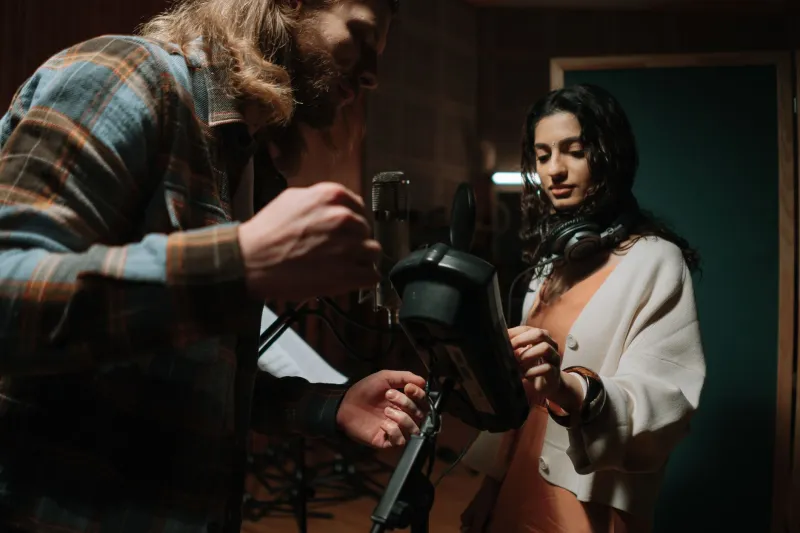
There's a moment in a great film where you stop watching and start inhabiting it. You're no longer sitting in a theater or on your couch — you're in the rain-soaked alley, or the cramped diner, or the middle of a forest that feels like it's breathing. Nine times out of ten, it's not the cinematography pulling that trick. It's the sound.
For decades, immersive audio has been treated like a luxury — something reserved for the films with nine-figure budgets and dedicated sound stages. But that assumption is getting challenged hard right now, and the people doing the challenging are indie filmmakers working out of converted garages, spare bedrooms, and rented studio time they booked at 2 a.m. because it was cheaper.
The result? A quiet sonic revolution that's making audiences lean forward in their seats, whether they realize why or not.
The Myth of the Million-Dollar Soundscape
Let's be honest about something: most moviegoers have no idea what a sound designer actually does. They know when dialogue sounds muffled. They notice when an explosion rattles their chest. But the layers in between — the ambient textures, the subtle emotional cues buried under a scene's surface, the way silence can be louder than anything — that craft lives in a weird blind spot in public film literacy.
That blind spot has historically worked against indie productions. Studios pour enormous resources into audio post-production, and audiences have been trained, subconsciously, to associate a certain sonic richness with quality filmmaking. If your indie feature sounds flat or thin, viewers check out — even if they can't articulate exactly why.
But here's what's changed: the tools haven't just gotten better. They've gotten accessible.
Digital audio workstations like Pro Tools, Reaper, and Logic Pro have democratized the technical side of sound design in a way that mirrors what digital cameras did for cinematography. A filmmaker in Albuquerque or Asheville now has access to software that major post-production houses use daily. Free and low-cost sound libraries — from Freesound.org to BBC's open archive — have given indie creators a massive head start on building sonic palettes. And YouTube tutorial culture means the knowledge gap between a self-taught indie sound designer and a studio-trained one is narrowing every year.
Recording the Unrecordable
The real creativity, though, isn't in the software. It's in the problem-solving that happens when you don't have a Foley stage or a budget for custom sound effects.
Take the concept of field recording — capturing real-world sounds in their natural environment and weaving them into a film's audio bed. Indie sound designers have turned this into an art form born partly out of necessity. Instead of licensing the sound of a busy highway, you drive out there with a decent portable recorder and capture it yourself. Instead of pulling generic crowd noise from a library, you record the specific ambience of the actual location where your film was shot. The result isn't just cheaper — it's often better, because it carries the authentic acoustic fingerprint of your story's world.
Some indie teams have taken this even further, building what they call "found sound" philosophies into their productions from day one. Every object on set becomes a potential audio source. The creak of a specific door. The hum of a particular refrigerator. These hyper-local sounds create a subliminal coherence that audiences feel even when they can't name it.
Emotion Is the Real Mix
If you talk to indie sound designers long enough, a theme emerges pretty quickly: the best sonic work isn't about technical accuracy. It's about emotional truth.
This is where smaller productions can actually outmaneuver bigger ones. A studio blockbuster is often constrained by expectations — audiences want the spaceship to sound a certain way, the punches to land with a specific thud. Indie films have more freedom to get weird, to use sound expressively rather than literally.
Think about the way a character's internal state can be conveyed through audio alone — a gradual narrowing of the sonic field to simulate anxiety, or a sudden wash of environmental sound to signal a character reconnecting with the world around them. These techniques cost almost nothing to execute but require genuine creative intention. And that's something no budget can substitute for.
The indie space has produced some genuinely inventive approaches here. Filmmakers have used binaural recording techniques originally developed for music to create 3D audio experiences in headphone-friendly formats, perfectly suited for the streaming era. Others have leaned into minimalism — stripping a scene almost entirely of ambient sound to create a tension that a wall of noise could never achieve.
Collaboration Changes Everything
One of the more underrated shifts in indie sound design is cultural rather than technical: the growing recognition that a sound designer needs to be part of the conversation from the very beginning of production, not just handed footage in post and told to "make it sound good."
When a sound designer is brought in during pre-production, they can help scout locations with acoustic properties in mind. They can flag potential audio problems before they become expensive fixes. They can develop a sonic language for the film — a kind of audio style guide — that shapes everything from how scenes are recorded on set to how they're mixed in the final cut.
This collaborative model is increasingly common in indie filmmaking communities, partly because indie productions often run lean enough that everyone has to wear multiple hats and stay in constant communication anyway. The silos that sometimes separate departments in bigger productions don't always exist at the indie level, and that can be a genuine creative advantage.
What This Means for the Audience
For anyone watching independent films right now — especially the ones finding their way to festivals and streaming platforms — the audio experience is worth paying attention to in a new way. The next time a small film pulls you completely into its world, take a second to close your eyes and just listen. Notice the texture of the environment. Notice what's absent as much as what's present. Notice how the sound shifts when the emotional stakes change.
What you're hearing is the work of people who figured out how to do more with less, and in doing so, often found something more interesting than the well-funded path would have produced.
Indie filmmaking has always been about finding the story that needs to be told and finding a way — any way — to tell it. Sound design, it turns out, is no different. The balloon doesn't need a stadium sound system to fly. Sometimes all it takes is exactly the right silence at exactly the right moment.