Pennies on the Frame: How Scrappy Filmmakers Are Turning Shoestring Budgets Into Big-Screen Moments
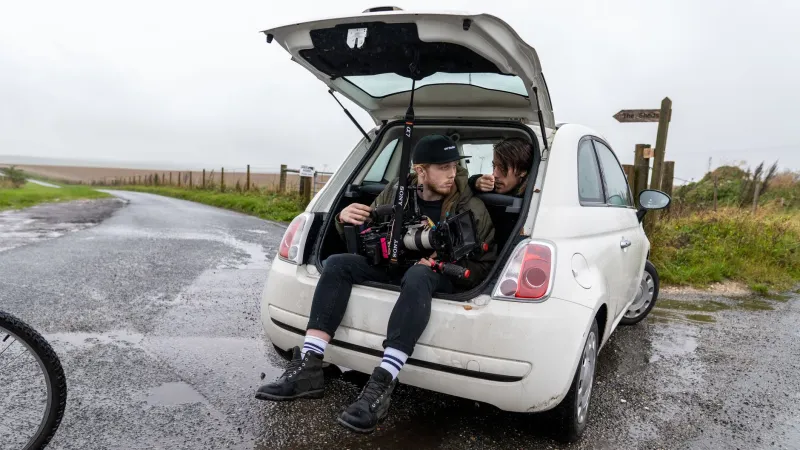
There's a certain kind of magic that happens when a filmmaker has almost nothing to work with. No safety net. No studio executive signing off on catering budgets. Just a story that refuses to stay quiet and a crew willing to believe in it hard enough to show up anyway. That's the spirit this site was built around — the idea that every story deserves to fly, even when the wind isn't exactly cooperating.
So let's talk money. Specifically, the very small amount of it that some of the most compelling independent films ever made were built on.
The $50K Ceiling (And Why It's Not Really a Ceiling)
Fifty thousand dollars sounds like a lot until you start pricing out camera rentals, sound equipment, location permits, and post-production. Then it starts to look more like a long weekend in a mid-range hotel. And yet, filmmakers across the country are regularly producing festival-worthy, theatrically distributed features for that number — and sometimes considerably less.
The key shift in thinking is this: a micro-budget isn't a limitation to work around. It's a creative constraint that forces better decisions. When you can't afford the easy solution, you find the interesting one. That's not just motivational poster talk — it's backed up by the work itself.
Take Tangerine, Sean Baker's 2015 breakout shot entirely on iPhone 5S cameras with a budget reportedly under $100,000. It premiered at Sundance, got picked up for theatrical distribution, and launched Baker into a career that would eventually land him at Cannes. The budget didn't hold the film back. In a lot of ways, it defined the film's kinetic, street-level energy.
The Barter Economy of Independent Film
One of the least glamorous and most effective tools in the micro-budget filmmaker's kit is the trade. Services swapped for screen time. Locations offered in exchange for production credit. Catering provided by a local restaurant that wants a shout-out in the end credits.
This isn't a new phenomenon, but it's become increasingly sophisticated. Filmmakers are approaching local businesses the same way a podcast might approach a sponsor — with a clear pitch, a defined audience, and a tangible benefit. A coffee shop that lets you film for two weekends gets its name in the credits of something that might screen at a regional festival. That's not nothing.
The same logic applies to crew. Many emerging cinematographers, sound designers, and editors are actively looking for projects that will push their reels forward. A first-time director with a compelling script can often attract genuine talent by offering something a paying gig can't: creative ownership and a story worth telling.
Guerrilla Tactics That Actually Work
Filming without permits is a gamble, and we're not here to encourage anyone to break local ordinances. But shooting fast, light, and in real environments — with the cooperation of the people in them — is a time-honored tradition in American independent film.
The practical version of this looks like a crew of four instead of forty. It looks like a director who also operates the camera. It looks like natural light weaponized as an aesthetic choice rather than a budget compromise. Robert Rodriguez famously detailed his approach in Rebel Without a Crew, a book that still circulates among film school students like a sacred text. His core argument holds: constraints clarify.
More recently, filmmakers have used social media to turn guerrilla production into a community event. Posting a casting call on Instagram, filming in a neighborhood where the director grew up, building an audience before the film is even finished — these aren't just budget hacks. They're distribution strategies baked into the production itself.
Post-Production: Where Budgets Go to Die (Unless You're Smart)
If there's one place micro-budget films tend to hemorrhage money, it's post. Color grading, sound mixing, visual effects, music licensing — the list adds up fast. The filmmakers who survive this stage tend to have one thing in common: they planned for it from the start.
That means building relationships with post-production houses before principal photography begins. Many facilities offer discounted or deferred rates for independent projects, particularly if there's a festival submission timeline involved. Film students and recent graduates often provide high-quality work at rates that reflect where they are in their careers — which is a win for everyone.
Music is another area where creativity pays off. Licensing a recognizable song can cost more than the entire production budget of some micro-budget films. But composers looking to build their portfolios are everywhere, and the independent music world is full of artists who'd rather have their work in a film than collecting digital dust on a streaming playlist.
The Festival Circuit as a Return on Investment
Here's something the studio system doesn't always acknowledge: a film that costs $40,000 to make doesn't need to gross $40 million to be a success. A strong festival run — Tribeca, SXSW, Sundance, or any number of strong regional festivals — can generate press, distribution interest, and career momentum that no marketing budget can reliably buy.
Beasts of the Southern Wild, produced for around $1.8 million (lavish by micro-budget standards, but a rounding error by Hollywood's), went from Sundance to an Academy Award nomination for Best Picture. Primer, Shane Carruth's mind-bending time travel film, was made for $7,000 and won the Grand Jury Prize at Sundance in 2004. These aren't flukes. They're proof of concept.
The festival circuit rewards originality and specificity — two things that money can actually get in the way of. When you're not trying to appeal to a four-quadrant audience, you're free to make something genuinely strange and personal. And strange and personal is exactly what festival programmers are looking for.
What Aspiring Filmmakers Can Take Away
If you're sitting on a script right now, doing the math and feeling like the numbers don't add up, here's the honest truth: they probably don't. Not by conventional standards. But conventional standards weren't built for stories like yours.
Start with what you have. The location you can access for free. The actors who believe in the project. The crew member who owes you a favor. Build outward from there, and be ruthless about what the story actually needs versus what would be nice to have.
Document everything — not just for legal and accounting reasons, but because the story of how you made your film is part of the film's story. Audiences respond to authenticity, and there's nothing more authentic than a filmmaker who figured it out against the odds.
The black balloon doesn't rise because conditions are perfect. It rises because someone decided it was going to, and then did the unglamorous work of making that happen. Budget is just one more thing standing between a story and the sky. Plenty of filmmakers have cleared it. You can too.