The Quiet Revolution: Why Independent Cinema Keeps Saving Hollywood From Itself
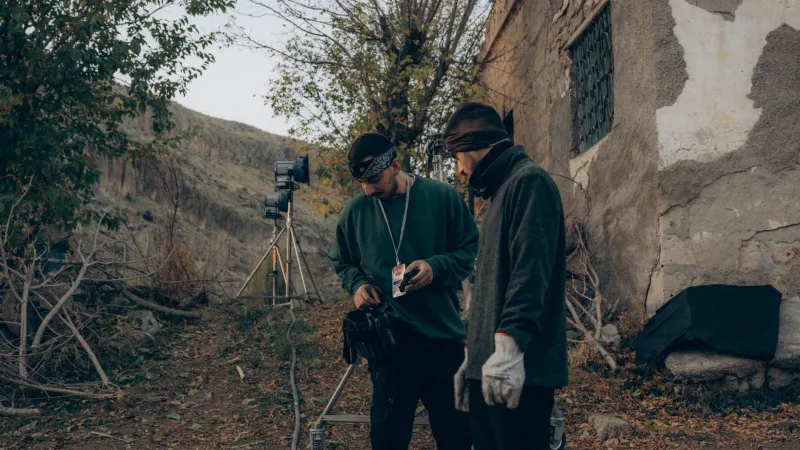
Let me say something that might be obvious to some people and borderline offensive to others: Hollywood, left entirely to its own devices, would probably stop making interesting movies.
I don't mean that as a cheap shot. The major studios employ thousands of talented, passionate people who genuinely love film. But studios are also corporations, and corporations optimize for predictability. The result is a theatrical landscape where the same intellectual properties cycle through reboots and sequels and cinematic universes while genuinely new stories — the kind that make you uncomfortable, or confused, or quietly devastated in a way you can't fully articulate — get pushed to the margins.
Those margins are where independent cinema lives. And those margins, it turns out, are where culture actually gets made.
The Stories That Studios Won't Touch
Think about the films that have genuinely shifted something in the American cultural conversation over the past two decades. Moonlight. Beasts of the Southern Wild. Tangerine. The Florida Project. Minari. Pariah. Fruitvale Station. Hereditary. Get Out (which, yes, had studio backing through Blumhouse and Universal — but was conceived and executed with full indie creative control).
None of these films were greenlit because they fit an existing franchise template. None of them were made because a focus group said audiences wanted them. They exist because a filmmaker had something specific and urgent to say, found a way to say it on a limited budget, and refused to sand down the edges that made the story worth telling in the first place.
Moonlight told a story about a Black gay man's journey through poverty, identity, and love with a tenderness and specificity that Hollywood had never attempted at that scale. It won the Academy Award for Best Picture. Tangerine was shot entirely on an iPhone 5S and introduced audiences to the lives of two transgender sex workers in Los Angeles with humor, heartbreak, and zero condescension. It didn't win any Oscars — but it changed how filmmakers thought about technology, representation, and what a movie could look like.
These aren't niche curiosities. They're cultural documents.
Challenging the Industry From the Inside Out
Independent films don't just tell different stories — they change what the industry believes is possible.
Before Get Out, mainstream Hollywood had essentially given up on the idea that a racially conscious horror film could perform at the box office. Jordan Peele's debut — made for $4.5 million, grossed over $255 million worldwide — didn't just prove that theory wrong. It obliterated it so thoroughly that studios immediately started greenlit a wave of socially engaged horror projects. One film rewrote the genre math.
Before Paranormal Activity, found-footage horror was considered a gimmick with a ceiling. Made for roughly $15,000 and eventually distributed by Paramount after a bidding war, the film grossed nearly $200 million globally and launched a franchise. More importantly, it demonstrated that audience investment has almost nothing to do with production budget and everything to do with story execution.
Before Napoleon Dynamite, quirky regional comedies with deadpan sensibilities and no conventional story arc were considered unmarketable. The film cost $400,000, grossed over $46 million, and became a genuine cultural phenomenon that people are still quoting twenty years later.
The pattern is consistent: an indie film does something the studios said couldn't be done, and then the studios spend the next five years trying to replicate it.
Representation as a Form of Resistance
There's a more personal argument to be made here, too — one that goes beyond box office math.
For audiences who have spent their entire lives watching mainstream Hollywood cinema and rarely, if ever, seeing themselves reflected in it, independent films aren't just entertainment. They're evidence. Evidence that their experiences are worth depicting. That their stories have complexity and texture. That they exist as full human beings rather than supporting characters in someone else's narrative.
This is what Pariah did for young Black queer women in 2011. What The Farewell did for Asian American families navigating cultural identity in 2019. What Driveways did for working-class communities in the rural Northeast. What Lingua Franca did for undocumented Filipino immigrants in New York.
None of these films had massive marketing budgets. None of them opened on 3,000 screens. But each of them found their audience — sometimes through festivals, sometimes through word of mouth, sometimes through a single viral moment on social media — and when they did, the response wasn't just appreciation. It was recognition. That's my life. Someone made a film about my life.
That is not a small thing. That is, in fact, everything.
The Authenticity Problem
Here's what big-budget productions struggle to manufacture, no matter how much money they throw at it: authenticity.
Authenticity comes from constraint. It comes from a director who couldn't afford to shoot the safe version of a scene, so they shot the real version. It comes from an actor who wasn't given ten takes to find a performance, so they brought everything they had to take one. It comes from a story that wasn't filtered through seventeen rounds of notes from executives who needed it to appeal to four-quadrant audiences globally.
The limitations of independent filmmaking — the tight schedules, the minimal crews, the locations that are real places rather than sets — create a texture that audiences can feel even when they can't name it. There's a reason people describe indie films as feeling "real" even when the stories are wildly stylized or surreal. It's because the conditions under which they were made leave a fingerprint on the final product.
That fingerprint is what we're chasing here at The Black Balloon Movie. It's what makes a film worth watching twice, worth talking about at dinner, worth pressing on a friend and saying you have to see this.
The Stakes Are Real
In 2024, with streaming consolidation shrinking the number of platforms willing to take risks, with theater chains still recovering from pandemic-era losses, and with AI threatening to industrialize storytelling in ways that would have seemed like science fiction a decade ago, the case for independent cinema isn't just cultural. It's existential.
If we lose the ecosystem that allows independent films to get made, distributed, and seen, we don't just lose some interesting movies. We lose the laboratory where the next generation of filmmakers learns what film can do. We lose the testing ground where new stories prove themselves before the industry is willing to fund them at scale. We lose the mirror that shows American culture back to itself in ways that are honest rather than flattering.
Independent films are not a lesser version of Hollywood movies. They are frequently a better version — more honest, more specific, more willing to sit with discomfort rather than resolve it neatly in the third act.
Every story deserves to fly. Independent cinema is the wind that makes that possible. The least we can do is pay attention.