Pixels and Passion: How Indie Filmmakers Are Using AI Without Losing Their Voice
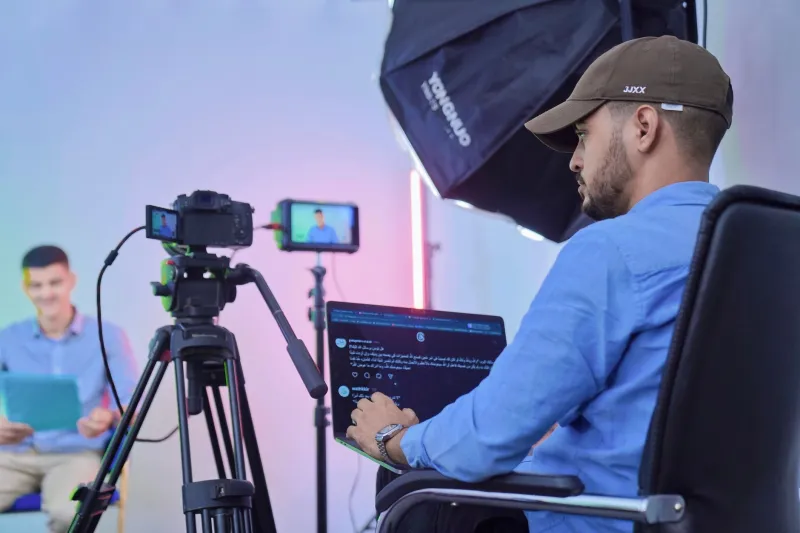
There's a scene a lot of indie filmmakers know too well. It's 2 a.m., the coffee's gone cold, the script still doesn't work, and the budget spreadsheet is actively mocking you from the other tab. For decades, that moment was just part of the deal — the lonely, grinding price of making something from nothing.
Now, some filmmakers are opening a third tab.
AI tools have crept into independent production in ways that feel less like a takeover and more like a quiet assist. Not a co-director. More like a very fast, very tireless intern who never complains and occasionally says something genuinely useful. The trick, as a growing number of indie creators are figuring out, is knowing when to listen to it — and when to shut the laptop and trust your gut.
The Scrappy Filmmaker's New Toolkit
Let's be honest about what we're actually talking about here. For most independent filmmakers operating outside the studio system, AI isn't some gleaming supercomputer spitting out Oscar-ready screenplays. It's tools like ChatGPT helping punch up dialogue in a third-act scene that's been stuck for weeks. It's Runway ML generating a background visual effect that would've cost ten times the budget to shoot practically. It's Descript cleaning up audio from a location recording where a truck decided to drive past mid-take.
These aren't glamorous applications. They're practical ones. And that practicality is exactly why indie filmmakers — who've always been the scrappiest problem-solvers in the room — are leaning into them faster than their studio counterparts.
Take the example of small production teams working on micro-budget features across cities like Austin, Portland, and Atlanta. Many are using AI-assisted tools during pre-production to stress-test story structure, identify pacing issues in early drafts, or generate rough storyboard concepts before a human illustrator refines them. The AI doesn't write the movie. It helps the filmmaker see the movie more clearly before a single frame is shot.
That distinction matters more than people give it credit for.
Collaborator, Not Creator
The filmmakers who seem to be getting the most out of AI are the ones who've figured out how to treat it like a collaborator rather than a crutch. There's a real difference between asking an AI tool to write your script and asking it to help you identify why your second act keeps stalling. One replaces your creative instinct. The other sharpens it.
Director and writer Jess Huang, who produced a debut feature on a budget that wouldn't cover catering on a network TV set, described her relationship with AI scriptwriting tools as "arguing with a very confident stranger." She'd feed in a scene, get a suggestion, reject most of it, and occasionally find one line or structural note that cracked something open. The idea that sparked the rewrite was still hers. The tool just helped her find it faster.
That's the version of AI integration that feels sustainable — and more importantly, ethical. The creative vision stays human. The machine handles some of the legwork.
Where It Gets Complicated
Here's where the conversation gets a little less comfortable.
Not every AI application in indie film is as clean-cut as fixing a script or removing background noise. Visual effects tools that can convincingly alter faces, replicate locations, or generate crowd scenes raise real questions about what we owe audiences in terms of transparency. If a filmmaker uses AI to recreate a location they couldn't afford to shoot at, do viewers deserve to know? If a background actor's likeness is extended digitally without explicit consent, where does that land legally — and ethically?
These aren't hypothetical edge cases anymore. They're conversations happening right now in indie production circles, and they don't have clean answers yet. The Screen Actors Guild-American Federation of Television and Radio Artists (SAG-AFTRA) agreements have started to address some of this at the studio level, but independent productions often operate in murkier territory, with smaller teams and less legal infrastructure to navigate the gray zones.
Filmmakers who are serious about using AI responsibly are starting to build their own informal guidelines. Some commit to disclosing AI-assisted elements in their credits. Others draw hard lines around anything involving human likeness. A few have started including language in their crew and talent agreements that specifically addresses AI use during production.
It's not a perfect system. But it's a start — and it reflects something genuinely encouraging about the indie community: when the rulebook doesn't exist yet, they tend to write one themselves.
Keeping the Soul in the Frame
The anxiety around AI in creative industries often comes down to one fear: that the machine will eventually make human storytellers redundant. It's a fear worth taking seriously. But it's also worth separating from what's actually happening on the ground in independent film right now.
The filmmakers embracing AI tools aren't doing it because they want less of themselves in their work. Most of them are doing it because they want more — more time to focus on performance, more resources to realize a visual idea they couldn't otherwise afford, more bandwidth to stay present on set instead of drowning in logistics.
A balloon only flies because of what's inside it. The gas, the lift, the invisible force that makes the whole thing possible. AI, at its best, might just be part of what gives an indie film the lift it needs to get off the ground. But the story it carries — the weight of it, the meaning, the reason anyone should care — that still has to come from somewhere human.
No algorithm has figured out how to want something badly enough to make a movie about it. Not yet. And until that changes, the soul of independent film is exactly where it's always been: in the hands of the people who couldn't stop making it even when everything said they should.
The Bottom Line
AI isn't going to save independent filmmaking. It's also not going to ruin it. Like every tool that's come before — digital cameras, non-linear editing software, crowdfunding platforms — it's going to be shaped by the people who pick it up and decide what to do with it.
The filmmakers who'll use it best are the ones who already know what they're trying to say. The tools don't give you that. They never have. But for a director at 2 a.m. with cold coffee and a script that won't cooperate, having a fast, tireless, occasionally useful collaborator in the room?
That's not selling out. That's just surviving long enough to finish the film.