Stolen Frames: How Indie Filmmakers Are Fighting Back Against the Deepfake Threat
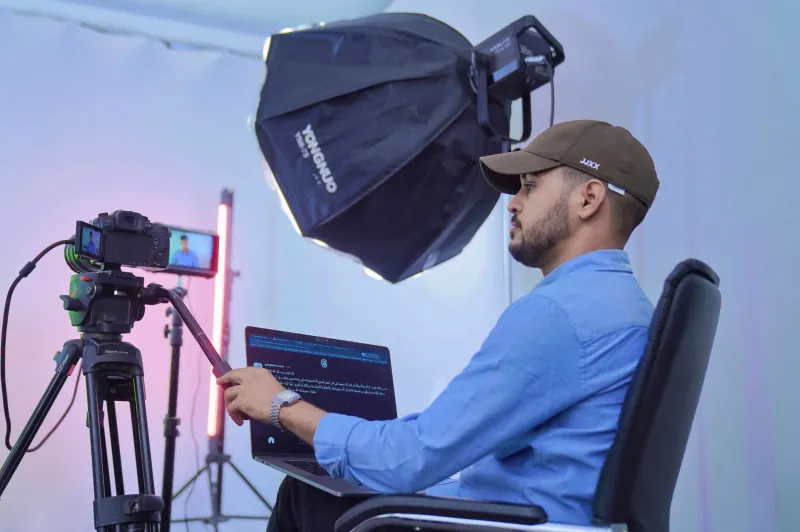
There's a particular kind of dread that comes with pouring everything you have into a film — your savings, your relationships, your sleep — and then watching someone else twist it into something unrecognizable. For a growing number of independent filmmakers across the US, that dread has a name: deepfakes.
What once felt like a distant, sci-fi-adjacent concern has quietly become a very real problem for indie creators. The same AI tools that generate convincing fake videos of celebrities are now accessible enough that bad actors can use them to manipulate independent films, fabricate performances from real cast members, or repurpose footage in ways no one ever consented to. And unlike the major studios — with their armies of lawyers and content monitoring teams — indie filmmakers are often left scrambling to figure out what just happened to their work.
Why Indie Films Are Easier Targets
It's not that independent filmmakers are careless. It's that the infrastructure protecting them is paper-thin compared to what the big players have access to. A studio film comes wrapped in layers of legal protection, digital watermarking, and rights management systems that most indie productions simply can't afford to replicate.
Smaller teams also mean fewer eyes on distribution channels. When a manipulated clip of your film shows up on a foreign streaming platform or gets shared across social media with a deepfaked performance dropped in, you might not find out for weeks — if ever. By then, the damage to your film's reputation, your cast's image, and your own intellectual property could already be done.
There's also the consent problem. Indie films often cast emerging actors who sign contracts that were never written with AI manipulation in mind. A bad actor — in the non-acting sense — could theoretically take footage of a real performer from your film and use it to generate entirely new content. No studio backing means no legal department automatically watching for that kind of thing.
The Tools Filmmakers Are Actually Using
The good news is that the indie community doesn't just roll over. Filmmakers are increasingly turning to digital watermarking services that embed invisible, persistent identifiers into their footage. Companies like Digimarc and Imatag offer tools that let creators track where their content ends up online — even if it's been cropped, color-shifted, or re-encoded.
Content credentials are another growing piece of the puzzle. The Coalition for Content Provenance and Authenticity (C2PA) — backed by Adobe, Microsoft, and others — has developed an open standard that essentially creates a verifiable chain of custody for digital media. Think of it like a birth certificate for your footage. Some cameras and editing platforms are already building this in natively, and indie filmmakers who stay ahead of the curve are starting to adopt it from day one of production.
Blockchain-based rights registration is also gaining traction. Platforms like Proof of Existence or more film-specific services allow creators to timestamp and register their work in a way that's publicly verifiable and tamper-resistant. It's not a silver bullet, but it gives you something concrete to point to when a dispute arises.
Getting Legal Before You Need Legal
Here's the uncomfortable truth: most indie filmmakers don't think about deepfake-specific protections until after something goes wrong. Entertainment attorneys who specialize in IP law will tell you that updating your cast and crew contracts to explicitly address AI and synthetic media is no longer optional — it's essential.
Language around likeness rights, synthetic reproduction, and AI-generated content needs to be baked into agreements from the jump. Organizations like Volunteer Lawyers for the Arts offer low-cost or pro bono legal help to independent creators, and a growing number of entertainment law clinics at US law schools are beginning to address AI-specific IP issues as part of their practice.
Filing copyright registration with the US Copyright Office early — and doing it for individual elements like your screenplay, score, and final cut separately — also gives you a stronger legal footing if you ever need to pursue infringement. Registration isn't just a formality; it's what allows you to seek statutory damages and attorney's fees in federal court.
The Community Response
One of the most encouraging things happening right now is that indie filmmakers aren't just protecting themselves individually — they're starting to organize. Film collectives, festival networks, and online communities are building shared resources around AI literacy and digital rights. Sundance, SXSW, and regional festivals have all begun incorporating panels and workshops on synthetic media and creator protections into their programming.
The Independent Film & Television Alliance (IFTA) has been pushing for clearer federal guidelines around AI-generated content and likeness rights. Meanwhile, filmmaker-led advocacy groups are pressuring platforms like YouTube, Vimeo, and TikTok to improve their deepfake detection and takedown processes — because right now, the burden of proof falls almost entirely on the creator.
There's also a grassroots element worth noting. Indie filmmakers are increasingly sharing information with each other through forums, Discord servers, and social media groups dedicated specifically to navigating the AI landscape. That kind of peer-to-peer knowledge sharing might not sound glamorous, but it's exactly the kind of scrappy, community-driven problem-solving that indie film has always been built on.
What's Coming Next
The technology isn't slowing down, and pretending otherwise would be naive. Deepfake generation tools are getting cheaper, faster, and more convincing by the month. What takes a skilled bad actor weeks to produce today might take minutes in two years.
But the protective technologies are also advancing. AI-detection tools trained specifically to identify synthetic media are improving rapidly. Platforms are under increasing regulatory and public pressure to do more. And legislation — while frustratingly slow — is beginning to catch up, with several US states passing laws specifically addressing non-consensual deepfakes and AI likeness theft.
For indie filmmakers, the takeaway isn't panic. It's preparation. The same spirit that drives someone to make a film with a skeleton crew and a maxed-out credit card is the same spirit that'll get them through this. You just have to know what you're dealing with.
Protect your frames. Register your work. Update your contracts. And maybe most importantly — stay connected to the community of people fighting the same fight. Because in indie film, that's always been the real competitive advantage.
The balloon doesn't fly on its own. Neither does the fight to keep your work yours.