What the Cut Confesses: How Indie Filmmakers Say the Unsayable Through Editing
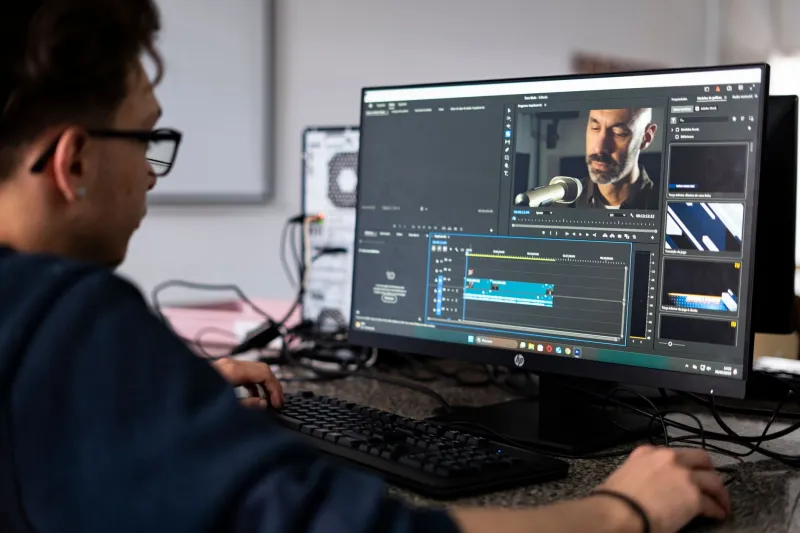
There's a version of every independent film that exists only in the editing room — raw, unfiltered, terrifyingly honest. It's the version the director paces around at 2 a.m., the one that makes the editor go quiet for a few seconds before saying, "Yeah. I think that's it." It's the version nobody scripted.
For a growing number of indie filmmakers across the US, the edit isn't the last step. It's the bravest one.
The Script Lies. The Cut Doesn't.
Here's something film school doesn't always tell you: dialogue is the most controlled thing on a set. Every word has been drafted, revised, workshopped, and approved. Actors have rehearsed it. The director has approved it. By the time a line lands on set, it's been through so many hands it can barely feel anything anymore.
The edit, though? That's where the filmmaker's actual nervous system shows up.
Pacing choices — how long you linger on a face before cutting away, whether you let a scene breathe or yank the audience forward — communicate emotional truth in ways that no amount of careful scripting can manufacture. A two-second hold on an actor's eyes after a conversation ends can say more about grief, longing, or quiet devastation than three pages of exposition ever could.
Independent filmmakers, often working without the safety net of studio oversight or the distraction of bloated budgets, tend to discover this faster than their Hollywood counterparts. Constraint, it turns out, is a pretty effective truth serum.
When There's No Money for Another Take, You Find Another Way
Talk to any indie editor who's worked on a shoestring production and they'll tell you the same thing: the limitations force a kind of creative recklessness that ends up being the film's greatest asset.
When you can't afford reshoots, you work with what you have. When an actor's performance in take three is technically flawed but emotionally devastating, you use take three. You find the cut that protects that moment. You build the scene around it rather than around what was planned.
This is where juxtaposition becomes a filmmaker's secret weapon. Placing two images next to each other that have no logical reason to coexist — a child's laughter cutting to an empty chair, a celebration segueing into a character alone in a parking lot — creates meaning the script never put there. The audience's brain does the heavy lifting, and the emotional resonance lands harder because it wasn't explained.
Some of the most affecting indie films of the past decade — think A24 releases, regional festival darlings that blew up on streaming — built their emotional cores almost entirely in post. The story that got shot and the story that got told were often very different animals.
Silence as Punctuation
One of the most underused tools in American independent cinema is the deliberate, uncomfortable pause. Commercial films are terrified of silence. Streaming algorithms have trained audiences to expect constant stimulation. But silence in an edit — a beat held just long enough to make the viewer lean in — can crack a scene wide open.
When an indie filmmaker chooses to let a moment sit, they're making a confession. They're saying: this matters, and I'm not going to tell you why, because you already know. That's a level of trust in the audience that mainstream productions rarely extend.
The late-night edit sessions where these decisions get made are oddly intimate spaces. It's often just a director and an editor, a laptop, and a timeline full of footage that represents months of work and, frequently, a significant chunk of someone's personal savings. The stakes are real. The emotional investment is total. And that pressure — that vulnerability — tends to produce editing choices that feel lived-in rather than engineered.
Unconventional Structure as Emotional Argument
Non-linear storytelling gets a lot of credit for being "arty," but the best unconventional narrative structures in indie film aren't being weird for weirdness's sake. They're making an argument about how memory, trauma, or identity actually works.
When a filmmaker fragments a timeline — jumping between past and present without clean transitions, or cycling back to the same moment with new context — they're replicating the way the mind actually processes difficult experiences. It doesn't feel like a gimmick because it isn't one. It feels true.
This is especially powerful in stories about grief, family dysfunction, or identity — themes that dominate American indie cinema precisely because they're universal but also deeply personal. A filmmaker who has lived through something complicated understands that the story doesn't go in order. The edit reflects that. The audience feels it.
The Editor as Collaborator in Courage
It would be a mistake to talk about editing as purely the director's domain. The best indie editing relationships are genuine creative partnerships, and a skilled editor often gives a filmmaker permission to be braver than they thought they could be.
Editors see the footage without the emotional baggage of the shoot. They weren't there for the argument that happened right before that particular take. They don't know that the actor improvised that line because they forgot the scripted one. What they see is what's on screen — and sometimes what's on screen is better than what anyone planned.
When an editor says, "What if we cut here and never go back?" or "What if we don't explain this at all?" — they're inviting the director to trust the audience more than the script does. That's a specific kind of courage, and indie filmmakers who embrace it tend to make work that lingers.
The Black Balloon Principle
There's something in the image of a black balloon — something that carries weight, that doesn't behave the way you expect, that rises anyway — that feels native to this conversation. The best indie films edited with genuine emotional honesty do exactly that. They carry something heavy. They move in unexpected directions. And somehow, against all logic, they get off the ground.
The editing room is where that happens. Not on set, not in the script, not in the pitch meeting. In the quiet, late-night space where a filmmaker finally stops managing the story and starts telling the truth.
That's the cut that matters. That's the one audiences feel in their chest on the drive home. And for independent filmmakers willing to sit in that room long enough — willing to be honest enough to let the edit say what the dialogue never could — it's the cut that makes a film worth remembering.