Bleeding on Camera: Why the Best Indie Films Are Born From the Worst Moments in a Filmmaker's Life
There's a moment in certain independent films where something shifts. The story stops feeling like a story. The dialogue stops sounding like dialogue. You're no longer watching a character grieve — you're watching someone remember how grief actually moves through a body. It's uncomfortable. It's specific. And it's almost impossible to fake.
That quality — call it rawness, call it authenticity, call it whatever you want — tends to trace back to the same source: a filmmaker who lived it first.
Pain Has a Texture That Research Can't Replicate
Studio productions have resources. They have consultants, therapists on set, sensitivity readers, and entire departments dedicated to making difficult subject matter feel responsible and polished. What they often can't manufacture is the grain of actual experience — the weird, unglamorous, slightly embarrassing truth of what it feels like to lose a parent too young, to walk away from a religion that shaped you, or to sit in a hospital waiting room for the fourth time in a year.
Independent filmmakers working from personal material don't have to research that texture. They carry it.
That's not to say suffering is a prerequisite for great filmmaking. But there's a reason so many breakthrough indie voices — the ones who show up at festivals and leave people genuinely shaken — are telling stories that feel pulled from somewhere private. Because they were.
The Case Studies That Keep Making the Argument
Look at Debra Granik's trajectory, or the early work of Barry Jenkins, or the films that launched directors like Chloé Zhao into the wider conversation. What these filmmakers share isn't just technical skill or a good eye — it's an intimacy with their subject matter that reads as lived-in rather than researched.
Jenkins has spoken openly about how Moonlight — a film about a Black boy navigating poverty, identity, and sexuality in Miami — drew on emotional truths from his own childhood even as it adapted Tarell Alvin McCraney's semi-autobiographical play. The result wasn't just a great film. It was a film that seemed to understand its characters' silences as well as their words.
Zao's Nomadland worked similarly. Her years spent actually living among the communities she depicted gave the film a patience and a lack of judgment that a more detached approach might have flattened into social commentary. Instead, it felt like witness.
For lower-budget and first-time indie directors, this kind of personal investment is often the only competitive advantage available. You may not have the budget to build a convincing set. But if you're telling a story about a fractured family dynamic you actually lived through, no studio film with a $40 million budget can outspend that knowledge.
When Vulnerability Becomes the Story's Engine
The practical question for any filmmaker mining personal experience isn't whether to use it — it's how much and to what end.
Vulnerability works on screen when it's been transformed. When the filmmaker has done the work of turning raw material into something shaped and intentional. The audience doesn't need to know the autobiographical roots of a story to feel its emotional truth. In fact, sometimes knowing too much about the real-life source can actually shrink a film — reducing it from a universal story to a personal testimony.
The best indie films that draw on trauma tend to do something specific: they use the personal as a doorway into the universal. The filmmaker's experience of losing a sibling becomes a film about the way grief reorganizes a family. The director's struggle with addiction becomes a portrait of how shame moves through generations. The story gets bigger than the source material, even as it stays rooted in it.
That transformation — from wound to narrative — is where the real craft lives.
The Line Between Honest and Indulgent
Here's the hard part: not every painful experience makes for a compelling film. And the closer a filmmaker is to their material, the harder it can be to see where the story serves the audience versus where it's still serving the filmmaker's need to process.
Self-indulgence in personal filmmaking usually looks like one of a few things. Scenes that run long because they feel emotionally important to the director, even when they've stopped earning their runtime. Characters who are clearly stand-ins for real people but haven't been developed into fully dimensional screen presences. Endings that resolve in ways that feel personally cathartic but narratively unearned.
The antidote isn't detachment — it's collaboration and honest feedback. The filmmakers who successfully translate personal trauma into powerful cinema almost always talk about the importance of trusted collaborators who weren't inside the original experience. An editor who can say, "this scene is beautiful, but it's for you, not for the audience." A co-writer who asks why a character makes a particular choice and pushes back when the answer is "because that's what really happened."
What really happened is a starting point. What the story needs is the destination.
Why Indie Cinema Is the Right Container for This Work
There's something about the independent film ecosystem that's uniquely suited to this kind of material. Lower budgets often mean smaller crews, which creates an intimacy on set that can actually support emotionally demanding work. The absence of studio interference means a filmmaker doesn't have to sand down the difficult edges to satisfy a committee. And the festival circuit — for all its pressures — tends to reward exactly this kind of specificity.
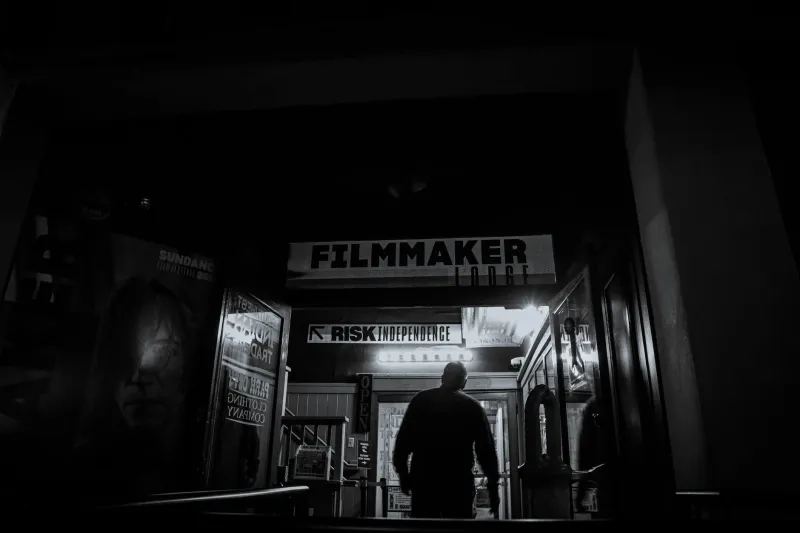
Audiences at Sundance or SXSW or Tribeca aren't looking for the same experience they can get at a multiplex. They're looking for films that feel like they were made by someone who had to make them. There's a difference between a film that was developed and a film that was excavated, and that difference is usually legible on screen.
At The Black Balloon Movie, we believe every story deserves to fly — and sometimes the ones that catch the most air are the ones that were dragged up from the deepest places. The filmmakers willing to go there, and to do the hard work of shaping what they find into something an audience can hold, are doing some of the most important creative work in American cinema right now.
It doesn't always look pretty. It rarely feels safe. But it lands in a way that the manufactured version never quite does.
And audiences, when they find it, remember it for a long time.