Off the Beaten Audition: Where Indie Filmmakers Are Finding the Faces That Stop You Cold
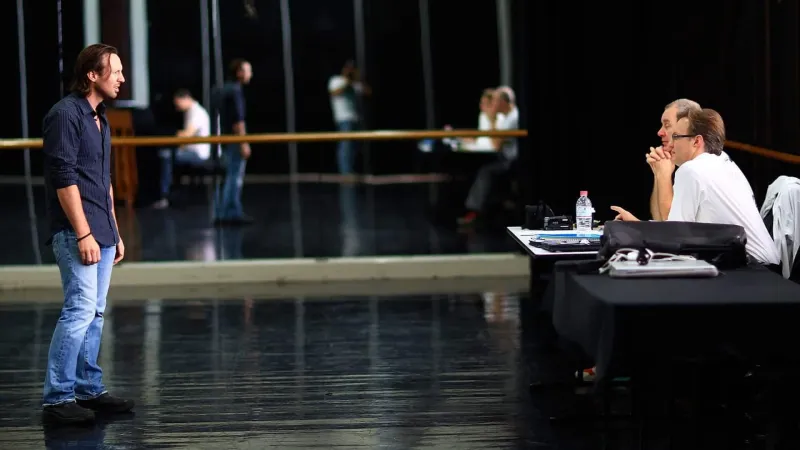
Photo: indie film casting director working with diverse actors open audition, via s.studiobinder.com
Forget the casting breakdown. Forget the agency submissions and the self-tape portals and the assistant who screens your emails before they reach anyone who matters. Independent filmmakers across the country are quietly building a parallel system for finding talent — one that's messier, more democratic, and increasingly producing results that Hollywood can't explain and definitely can't replicate.
The faces turning up in the best indie films right now didn't all come from conservatory programs or CAA. Some of them came from a community theater in Tulsa. Some came from a viral cooking video. Some came from a filmmaker who simply walked into the right diner on the right afternoon and saw something in the way a stranger laughed.
This is the new casting frontier. And it's wide open.
Why Indie Film Is Uniquely Built for This
Hollywood casting exists within a system of risk management. Studios spend enormous amounts of money on productions, and that money demands a certain kind of insurance — recognizable names, proven track records, talent that has already been pre-validated by other expensive productions. It's a self-reinforcing loop, and breaking out of it from the inside is nearly impossible.
Independent film operates on different math entirely. When your budget is lean, you can't afford a name anyway. But that limitation flips into a creative superpower: you're free to cast for pure rightness. For the face that fits. For the energy that can't be taught. For the person who makes your script suddenly feel like it was written for them specifically — even if they've never been on a set in their life.
"We're not buying a guarantee," says one indie director who cast her debut feature almost entirely from non-traditional sources. "We're betting on potential and instinct. And honestly? That bet pays off more often than people think."
The TikTok Effect
Social media has quietly become one of the most productive casting tools in independent film. Not in a cynical, follower-count way — smart indie filmmakers aren't casting influencers because of their built-in audiences. They're using short-form video as an audition reel that the performer didn't know they were making.
A person who can hold your attention for sixty seconds on a phone screen with no production support, no director, no lighting crew, and no second takes is demonstrating something real about their screen presence. That quality — the ability to be genuinely compelling in an intimate, low-stakes format — translates directly to the kind of naturalistic performance that indie cinema prizes.
Several emerging filmmakers have described scrolling through TikTok or Instagram Reels not for entertainment but as a deliberate scouting exercise. They're watching for people who have something ineffable happening behind their eyes, even when they're just talking about their day or doing something mundane. That's a different kind of screen test, but it's a legitimate one.
Theater: The Underrated Pipeline
If social media is the newest hunting ground, community and regional theater remains one of the most reliable ones — and it's consistently undervalued by filmmakers who assume stage training doesn't translate to screen work.
The reality is more nuanced. Theater actors who've spent years doing live performance have developed something that camera-trained actors sometimes lack: the ability to sustain an emotional truth over time without a director calling cut. They understand character at a structural level. They know how to listen, how to respond, how to be present in a scene rather than simply executing a performance.
The adjustment from stage to screen is real and requires direction. Stage work is often bigger, broader, calibrated for the back row. But the foundational skills are there, and a good director can help a theater-trained performer find their film register quickly. The results can be extraordinary.
Filmmakers who've mined regional theater — particularly Black Box productions, community theater in mid-sized cities, and university drama programs — consistently report finding talent that surprises them. People who can do things on camera that trained actors with bigger résumés simply can't.
The Everyday Person Gamble
And then there's the most radical casting choice of all: the non-actor. The real person. The individual who has never thought of themselves as a performer but who carries something on their face and in their body that no amount of acting class can manufacture.
This is not a new idea — Italian neorealism built an entire movement around it, and filmmakers from Robert Bresson to Benh Zeitlin have returned to it repeatedly. But it remains genuinely risky, and doing it well requires a specific kind of directorial skill. You're not directing a performance; you're creating the conditions for authenticity to emerge. That's a different job.
When it works, it's unmistakable. There's a quality to a non-actor's presence on screen that trained performers sometimes spend careers trying to access. It's the absence of the performance layer — the way the camera can see something unmediated and real. Audiences feel it, even if they can't name it.
The key, experienced directors say, is finding people whose real-life emotional reality intersects with what the character needs. You're not asking them to pretend. You're asking them to be.
Practical Steps for Casting Outside the Box
If you're an indie filmmaker ready to expand your search beyond the standard casting platforms, here's where to start:
Go where your characters live. If your film is set in a specific community, spend time there. Attend local events. Talk to people. The right face is often in the room where your story actually happens.
Partner with local theater companies. Reach out to community theaters, university drama departments, and improv troupes in your region. Offer to hold open auditions. You'll meet performers who are hungry, prepared, and genuinely excited to work on film.
Use social media intentionally. Search hashtags related to your story's world. Look for people who are compelling in unscripted moments. Slide into some DMs. The worst they can say is no.
Run chemistry reads, not just solo auditions. Casting is about relationships between people, not just individual performances. Get potential cast members in a room together early and watch what happens.
Trust your gut — and then question it. Your instincts matter, but unconscious bias is real. Make sure you're searching as widely as possible before you make final decisions.
The Right Face Changes Everything
At the end of the day, casting is the decision that shapes every other decision in a film. The right actor in the right role doesn't just perform your script — they reveal things about it you didn't know were there. They make the camera do things you didn't plan. They give audiences something to hold onto long after the credits roll.
Independent filmmakers who are willing to look beyond the obvious channels are finding those people. In living rooms and parking lots, on small stages and phone screens, in the everyday world that Hollywood has mostly stopped paying attention to.
The talent is out there. You just have to know where to look — and be willing to go there.