No Permit, No Problem: How Indie Cinematographers Are Making Stolen Shots Look Like Art
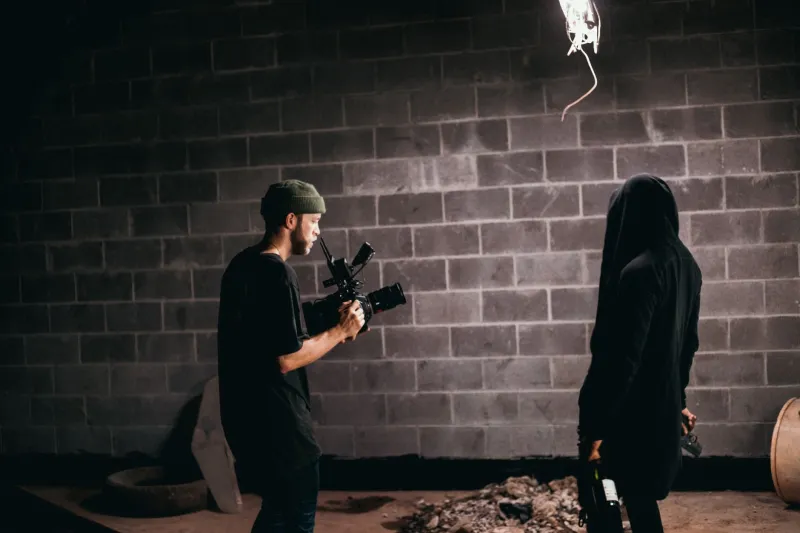
There's a certain kind of magic that happens when a filmmaker points a camera somewhere they're not supposed to be. The tension is real. The light is whatever God and a couple of LED panels decide it should be. And somehow, against all odds, the image comes out looking like something you'd see on a proper screen.
That's not luck. That's the guerrilla cinematographer at work.
Independent filmmakers have always had to claw their images out of difficult circumstances, but the current generation of indie shooters has turned constraint into craft. They're working in parking lots, abandoned warehouses, borrowed apartments, and half-lit diners — and they're coming out with footage that holds its own against anything a studio can produce with a full lighting package and a location scout on payroll.
So how do they do it? Let's get into it.
The Gear That Actually Matters
Forget the idea that great cinematography requires a camera that costs more than a car. The mirrorless revolution has quietly handed indie filmmakers a superpower. Bodies like the Sony FX3, the Blackmagic Pocket 6K, and even the newer iPhone Pro models are producing images that, in the right hands, are genuinely indistinguishable from big-budget productions.
But here's what the gear guides won't tell you: the camera is almost never the limiting factor. Light is. And the indie shooters who are really winning have figured out how to work with available light in ways that feel intentional rather than accidental.
A single Aputure 300D mounted through a window with a diffusion panel becomes a soft, directional key light that reads like a carefully rigged studio setup. A string of practical tungsten bulbs in an abandoned building creates atmosphere that no amount of post-production trickery can replicate. The trick is knowing what you have, knowing what you need, and knowing how to close that gap with whatever's in the van.
Location as a Creative Partner
Here's a mindset shift that separates the great guerrilla shooters from the ones who are just surviving: stop thinking of difficult locations as obstacles and start thinking of them as collaborators.
When you're shooting in a parking garage without a permit, the concrete columns aren't problems — they're natural frame dividers. The fluorescent overhead lighting isn't unflattering — it's character. The distant sound of traffic isn't noise pollution — it's texture. Every limitation in an unconventional location is also an opportunity to create something that couldn't exist anywhere else.
Some of the most visually striking indie films of the last decade were shot almost entirely in spaces their crews had no business being in. The rawness of those environments bleeds into the image in ways that a sanitized, properly permitted location simply can't offer. Audiences feel it, even when they can't name it.
The practical advice here is to scout obsessively and scout early. Walk the space at different times of day. Notice where natural light falls, how it changes, what it hits. Figure out which angles hide the stuff you don't want and showcase the stuff you do. By the time your cast and crew show up, you should be able to shoot that location like you've lived there for a year.
The Run-and-Gun Lighting Toolkit
Every serious guerrilla cinematographer has a core lighting kit that can be packed, moved, and set up in under ten minutes. The specifics vary, but the philosophy is consistent: portable, powerful, and adaptable.
A solid starter rig for no-permit shooting usually includes a couple of compact LED panels with adjustable color temperature, a foldable reflector in silver and white, a portable battery pack that can run your lights without a wall outlet, and some basic diffusion material — a shower curtain from Target works just as well as anything you'd find in a professional grip house.
Beyond the hardware, the real toolkit is a set of techniques. Bouncing light off a white ceiling creates a soft, even fill that eliminates harsh shadows without requiring a dedicated fill light. Flagging a practical lamp with a piece of black wrap redirects its glow exactly where you need it. Shooting slightly underexposed and lifting in post can sometimes preserve highlight detail in high-contrast environments that would otherwise blow out your image.
None of this is secret knowledge. But knowing it and actually applying it under pressure, on a stolen location, with a crew that needs to move fast — that's the skill.
The Art of the Quick Exit
Let's be honest about something. Shooting without a permit means accepting a certain amount of risk, and the smart guerrilla filmmaker manages that risk deliberately.
Keep your crew small. A six-person team draws less attention than twenty. Dress like you belong — nobody questions a person in normal clothes carrying a mirrorless camera. Know your exit routes before you start rolling. Have a cover story ready, even if you never need it. And when someone in authority shows up, be polite, be honest, and be ready to pack up without drama.
The best guerrilla shoots are the ones where nothing goes wrong because everyone was prepared for everything to go wrong.
Limitations as a Visual Language
The deeper truth about guerrilla cinematography is that it's not just a workaround for not having money. It's an aesthetic philosophy. The limitations of shooting in unconventional spaces — the available light, the imperfect angles, the ambient sound — create a visual language that feels alive in a way that controlled, over-lit productions often don't.
There's a reason audiences connect so viscerally with films that look like they were made by people who had something to prove. Because they were. The image on screen carries the energy of its own creation. The hustle shows up in the frame.
For indie filmmakers building a body of work, that energy is one of the most valuable things you can capture. It's the thing that makes a first feature feel urgent rather than amateur. It's the difference between a movie that looks like it was made on a small budget and a movie that looks like it was made by someone who knew exactly what they were doing.
Point the camera somewhere you're not supposed to. See what happens.