Blur the Line: What Narrative Indie Filmmakers Are Learning From Documentary Storytelling
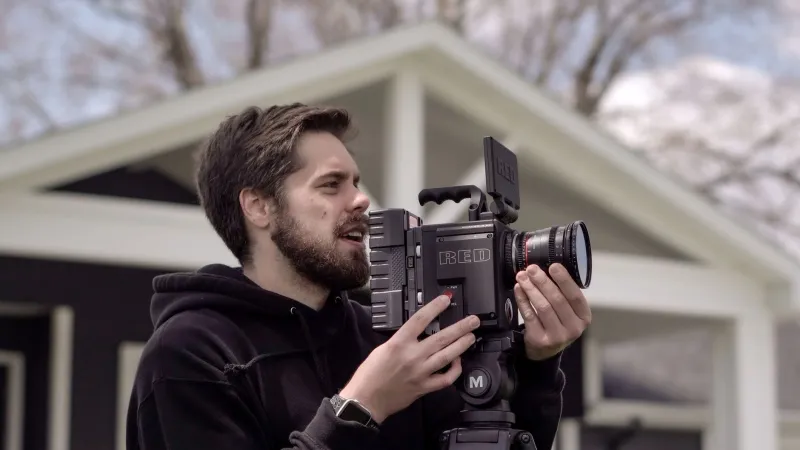
Watch enough indie films from the last ten years and you'll start to notice something. The best ones don't quite feel like movies. They feel like something you stumbled onto — footage of real people in real moments that happens to be arranged into a story. The camera hesitates. The performances are jagged at the edges. The lighting isn't always flattering. And somehow, all of that messiness makes the film more believable, more urgent, more true.
That effect isn't accidental. It's the result of narrative filmmakers deliberately crossing the aisle and borrowing from documentary cinema — one of the most creatively fertile cross-pollinations happening in American independent film right now.
Where the Walls Came Down
The separation between documentary and narrative filmmaking was never as clean as film schools made it seem. The French New Wave directors were openly inspired by cinéma vérité. John Cassavetes was blurring the line before most of today's filmmakers were born. But something shifted in the early 2000s, and then shifted again harder in the 2010s, as digital cameras made handheld, observational filmmaking cheap and accessible and audiences began to associate that aesthetic with authenticity.
The films coming out of distributors like A24, NEON, and Oscilloscope in recent years have leaned hard into this aesthetic. Think about the shaky, immersive camerawork in Hereditary, the documentary-style interview sequences embedded in Tangerine, or the raw, almost accidental-feeling performances that define films like Moonlight and The Rider. These are scripted films that have absorbed documentary's credibility and made it their own.
For indie filmmakers working outside the studio system, this approach isn't just an aesthetic choice — it's a practical one. The tools of documentary filmmaking are lean, affordable, and perfectly suited to small crews working fast.
The Handheld Question
Handheld cinematography is probably the most immediately recognizable documentary technique, and it's also the most misunderstood when narrative filmmakers try to borrow it. There's a meaningful difference between handheld that feels intentional and handheld that just feels like the camera operator was tired.
Documentary DPs develop an instinct for following action organically — they're not just moving the camera, they're responding to what's in front of them. When narrative filmmakers adopt that approach successfully, it's because they've internalized that same responsiveness. The camera isn't illustrating the scene; it's reacting to it.
Practically, this means giving camera operators the freedom to make choices in the moment rather than locking down every move in pre-production. It means rehearsing enough that the operator knows the beats of a scene, then letting them find those beats organically during the take. It means accepting that the most interesting frame might not be the planned one.
Chloe Zhao's work is a masterclass in this. Her approach on films like Nomadland and The Rider — working with non-professional actors in real locations, letting cameras find the action rather than dictating it — produces imagery that feels genuinely documentary even though it's serving a scripted narrative structure.
The Interview Technique, Repurposed
One of documentary's most powerful tools is the direct-to-camera interview. There's something about a person looking into a lens and speaking plainly that cuts through every layer of cinematic artifice and lands directly in the viewer's chest.
Narrative filmmakers have been experimenting with this technique in increasingly sophisticated ways. Rather than using interviews as a framing device (the talking-head cutaway that explains what happened), the most interesting applications use the interview format to create a kind of dual-time storytelling — a character reflecting on events the audience is simultaneously watching unfold.
This approach works especially well for stories with a confessional quality, where the emotional weight of a narrative depends on a character's self-awareness. The interview becomes a space where the audience can access interiority that pure observational filmmaking can't reach.
For indie filmmakers on tight budgets, there's also a purely practical upside: interview setups are simple, lighting-efficient, and can be shot with a skeleton crew. A well-lit, thoughtfully framed interview sequence can carry enormous narrative weight without costing much to produce.
Casting Outside the Comfort Zone
Documentary filmmakers don't cast — they find. And that distinction has huge implications for narrative filmmakers willing to look beyond traditional audition pipelines.
Some of the most compelling performances in recent indie cinema have come from non-professional actors, or from people whose life experience so closely mirrors their character's that the line between performance and reality nearly disappears. The casting of real Lakota Sioux riders in The Rider, or the use of actual sex workers in Tangerine, creates an authenticity that no amount of Method preparation can fully replicate.
This doesn't mean narrative filmmakers should abandon trained actors — it means they should think more expansively about what casting can look like and what it can accomplish. Mixing trained performers with non-professionals, or casting people whose real histories align with the story being told, can introduce a documentary texture into scripted material that transforms how audiences receive it.
The Risk of Losing the Story
Here's the honest counterpoint: documentary techniques can backfire badly if narrative filmmakers adopt them without understanding what they're actually for.
Handheld doesn't mean sloppy. Naturalistic performance doesn't mean unstructured. Documentary credibility is built on specificity — the specific detail, the specific gesture, the specific light at the specific time of day. When narrative filmmakers borrow the look of documentary without understanding the discipline behind it, the result is usually a film that feels neither authentic nor controlled. It just feels underprepared.
The key is intention. Every documentary technique a narrative filmmaker borrows should be in service of something — a specific emotional truth, a specific story beat, a specific relationship the film is trying to build with its audience. Technique without intention is just style, and style without purpose doesn't hold up over a feature's runtime.
The Takeaway for Indie Storytellers
The most exciting thing happening in American independent cinema right now is the breakdown of the wall between documentary and narrative filmmaking. For indie filmmakers, that breakdown is an invitation.
You don't have to pick a lane. You can shoot observationally and still have a script. You can use interview techniques and still tell a fictional story. You can cast non-professionals alongside trained actors and still direct with intention. The tools are all on the table.
The filmmakers who are winning at this are the ones who understand why documentary works — why it earns trust from audiences in a way that polished studio filmmaking sometimes doesn't — and then apply that understanding to stories that only fiction can tell.
That's a combination worth chasing.