Turn It Up or Turn Them Off: The Invisible Craft That Makes or Breaks an Indie Film
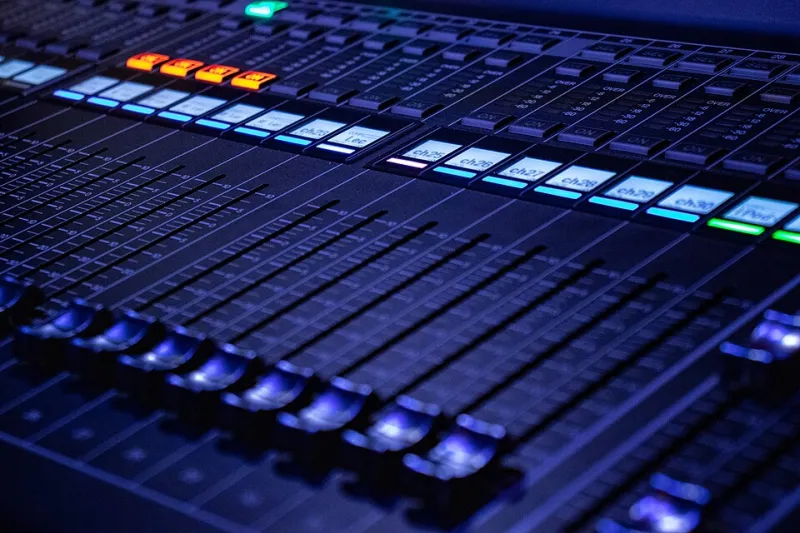
Photo: Lchader, CC BY-SA 4.0, via Wikimedia Commons
Here's a fun party trick for your next filmmaker hangout: ask everyone in the room to name the last movie they saw with beautiful cinematography. Then ask them to name the last one with beautiful sound. The second question will get you blank stares — and that's exactly the point. Sound is the department that succeeds by disappearing. And on an indie set, it's also the department most likely to get zero dollars and a volunteer with a boom pole.
That's a bet most filmmakers lose.
Bad Audio Reads as Bad Everything
There's a well-worn saying in post-production circles: audiences will forgive mediocre picture, but they'll never forgive muddy dialogue. It sounds like an exaggeration until you watch it happen in real time. A viewer tolerates a soft focus shot for thirty seconds. Two lines of unintelligible dialogue, though? They're reaching for the volume bar, then the remote, then the X button. On streaming platforms where the thumbnail is the audition and the first ninety seconds are the interview, rough audio is a death sentence wearing a very quiet disguise.
The cruel irony is that great sound is cheaper than great anything else. A $200 shotgun mic and a patient sound recordist will outperform a $20,000 camera every single time you screen the film for a real audience. Yet indie budgets consistently fund the visible and starve the audible.
ADR Without the ADR Budget
Automated dialogue replacement has a reputation problem. People hear "ADR" and picture a soundstage, a $400-an-hour studio, and an actor flown back in six months later. In practice, indie ADR has gotten radically more accessible.
- Closets are acoustic gold. A bedroom full of hanging clothes is a shockingly effective vocal booth. Some working sound editors record ADR in coat closets with a USB mic and nobody can tell the difference in the final mix.
- Match the room or fake the room. The hard part isn't capturing the performance — it's making it sit back into the original location. Record a few seconds of "room tone" on set (every sound recordist will beg you to do this; do it) and blend it underneath the new lines.
- Direct the performance, not just the line. Actors doing ADR cold sound like they're reading a grocery list. Play them their original take first. Give them the context. Ten minutes of direction saves ten hours of editing.
Foley on a Dime
Every footstep, jacket rustle, and coffee cup clink in a studio film was performed by a foley artist after the fact. Indie filmmakers assume they can't afford this. They're half right — they can't afford a foley stage. They can absolutely afford a foley afternoon.
A bag of cornstarch in a leather glove makes snow crunch. Celery snapped near a mic is a bone break. A ring of keys jingled slowly becomes chains. Walk around your house with a field recorder and you'll build a foley library in a weekend that a decade ago would've cost thousands in licensing.
The bigger secret: restraint. Amateur sound design overfills the track. Real rooms have quiet in them. Leaving negative space — actual silence between beats — is what makes the loud moments land. Which brings us to the elephant in the mix.
Silence Is a Storytelling Tool
The best indie films use quiet the way big films use score. A long pause before an answer. A kitchen scene with nothing but the refrigerator hum. These moments cost nothing and do everything — they build tension, they signal intimacy, they tell the audience pay attention, something matters here.
Compare that to the low-budget reflex of laying music over everything, terrified the audience might get bored. They won't. Boredom comes from clutter, not from calm.
Five Things to Do Before You Shoot
- Hire or recruit a dedicated sound person. Not "the PA who also holds the boom." A person whose only job is audio.
- Record thirty seconds of room tone at every location. Every. Single. One.
- Lavalier the actors even when you're using the boom. Redundancy is free insurance.
- Budget for a real mix, even a modest one. A skilled mixer with fresh ears will find problems you've gone deaf to.
- Watch your rough cut once with your eyes closed. Whatever confuses you by ear alone will confuse your audience tenfold.
None of this requires a Hollywood budget. It requires treating sound as a creative department instead of an afterthought — because that's exactly what it is. The mix is the last performance your film gives, and unlike the shoot, you can't fix it with another take. Give it the respect it's been quietly (sorry) earning all along.